
Flip or Rental? Choosing Your First Tulsa Investment
Flip or Rental? Choosing Your First Tulsa Investment

Most people who want to get into real estate investing spend more time debating this question than they spend actually investing. Flip or rental. Active income or passive income. Quick profit or long-term wealth. The internet has strong opinions on both sides and most of them are not useful because they are not specific to your situation.
I have been investing in Tulsa real estate for 25 years. I have held rentals, managed them myself, hired property managers, converted primary residences into income-producing assets, and watched investors on both sides of this decision win and lose depending on how well they understood what they were actually signing up for.
Here is how to actually decide.
The Question Nobody Asks First
Before you decide between a flip and a rental, you need to answer a more fundamental question.
What do you actually have available right now, time, money, or both?

Flipping requires time and active involvement. You are managing a renovation, coordinating contractors, making decisions under pressure, and racing against holding costs. You do not need to swing a hammer but you do need to be engaged and available throughout the process.
Rentals require capital and patience. You need enough to acquire the property, fund any necessary repairs, and carry the asset through a potential vacancy period before income stabilizes. Once it is running, a well-managed rental can be relatively passive. Getting it there requires capital and a longer time horizon.
If you have more time than money right now, the flip path may fit better. If you have more capital than time, the rental path almost always builds more sustainable wealth. If you have neither in abundance, the owner-occupied model I wrote about earlier this summer is still the most accessible entry point available. You can read that post here: https://lrahomes.com/post/how-one-tulsa-couple-built-a-real-estate-portfolio-before-30
What a Flip Actually Is and What It Is Not
A flip is a business, not a passive investment
Every successful flip requires active project management, accurate renovation budgeting, and precise market timing on both the buy and sell sides.
The 706 W. Boston flip in Broken Arrow that I wrote about earlier this week produced a $95,000 gross spread in under four months. That result came from buying at the right price, executing a disciplined cosmetic renovation, and pricing the finished product correctly for the current market. Every one of those decisions required active involvement and local market knowledge.
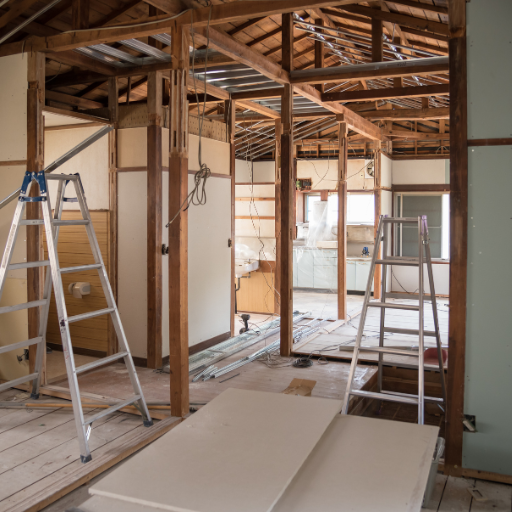
What a flip is not is a quick way to make easy money. The investors who struggle with flips almost always made one of three mistakes. They overpaid at acquisition and could not renovate their way to profitability. They underestimated the renovation scope and watched their margin disappear. Or they held the finished product too long and let carrying costs erode what the spread had created.
A flip done well is one of the most efficient ways to generate a meaningful return in a short timeframe. A flip done poorly can produce a loss on a transaction that looked profitable on paper when you bought it.
What makes a good flip candidate in Tulsa
The properties that flip well in the Tulsa metro share three characteristics: a purchase price that creates margin, a renovation scope that is primarily cosmetic, and a neighborhood where the finished product has a clear and supported sale price ceiling.
Broken Arrow, Bixby, Jenks, and established Midtown Tulsa neighborhoods all fit this profile right now. Mid-century and post-war housing stock priced below replacement cost in areas with strong school districts and consistent buyer demand is the sweet spot. Buyers in these markets are paying a meaningful premium for move-in ready homes, which is exactly the gap a well-executed flip fills.
What a Rental Actually Is and What It Is Not
A rental is a wealth-building engine, not a get-rich-quick strategy

The financial case for rental property in Tulsa is built on four simultaneous forces working in your favor: monthly cash flow, mortgage paydown by your tenant, appreciation over time, and tax advantages including depreciation.
None of those four forces produces dramatic short-term results on their own. Together, over five to ten years in a well-located Tulsa neighborhood, they produce the kind of wealth that most investors who chose the flip path exclusively are still chasing.
I wrote about cash flow specifically earlier this summer and the framework is worth revisiting before you make any acquisition decision. You can read that post here: https://lrahomes.com/post/the-tulsa-investors-guide-to-rental-property-cash-flow
What makes a good rental candidate in Tulsa
The properties that perform best as long-term rentals in Tulsa are in neighborhoods with genuine demand, meaning tenants choose to live there rather than simply accepting it as an option.
Midtown Tulsa, particularly near Cherry Street, Brookside, and the medical corridor, consistently produces low vacancy and strong tenant retention because people genuinely want to be there. South Tulsa suburbs including Bixby and Jenks draw strong tenant pools through excellent school districts. Both categories have produced reliable returns for landlords who bought at reasonable prices and managed their properties with intention.
The rental that gives landlords the most grief is almost always the one purchased because the price looked attractive without enough consideration for whether the location would attract and retain quality tenants.
The Third Path: When a Hold Becomes a Smart Sell
Sometimes the most important investment decision is not flip or rental. It is recognizing when a property you bought to hold has become something you should sell, and whether you have maintained it well enough to have that option.
I bought a duplex in Midtown Tulsa in May 2021 for $141,000. I bought it from a client who had become a friend. He and his dad had lived in it together for years, one on each side, with a door connecting the two units in the middle so they could visit each other whenever they wanted. When his dad passed away he was ready to sell and move into a single family home.
I bought it to hold. The location was exceptional. Walkable to shopping, groceries, and schools. A beautiful Midtown neighborhood with the kind of mature character that holds value decade after decade. I put approximately $25,000 into renovations, loved what it became, and started showing it to prospective tenants.
That is when the problem revealed itself.
The backyard had a beautiful fountain anchoring the back of the property and no way to separate it with a fence. When a father and son who loved each other shared that yard it was charming. When I tried to rent both sides to unrelated tenants it became an uncontrollable variable. What if one tenant had a dog and the other had a cat? What if one had young children and the other wanted quiet evenings outside? There was no renovation that could fix it. The shared yard and the fountain were permanent features of a property designed for two people who chose to share a life, not two strangers paying rent.
I sold it. Twenty-one days on market. Closed September 2021 at $211,000.
With $141,000 in acquisition and $25,000 in renovation, my total investment was approximately $166,000. The sale at $211,000 produced roughly $45,000 in net gain in about four months.
Here is the lesson that matters. I could sell at a gain because I had renovated the property correctly. The updates created the margin that made the exit profitable rather than painful. If I had bought it, identified the structural problem, and tried to sell it as-is without the renovation, the outcome would have looked very different.
That is the third path most investor content never talks about. You buy to hold, you discover a reason you should not, and your ability to change course profitably depends entirely on whether you treated the asset like something worth owning while you had it.
Maintain your investments correctly and you always have options. Neglect them and the market decides your exit for you.
The Decision Framework
Here is the clearest way I know to think through this decision for your specific situation.
Choose a flip if: You have active time to manage a project. You have access to renovation financing. You need income in the near term rather than wealth in the long term. You have a specific property opportunity where the margin is clear and the renovation scope is primarily cosmetic. You have a contractor relationship or can develop one quickly.
Choose a rental if: You are building long-term wealth and can be patient about when it materializes. You have or can access a down payment and reserves. You want relatively passive income once the property is stabilized. You are thinking in terms of a five to ten year hold rather than a four month flip. You are interested in the tax advantages that come with long-term ownership including depreciation.
Choose the owner-occupied model if: You are buying your next primary residence anyway. You want to use the most favorable financing available. You are willing to convert your current home to a rental when you move rather than selling it. You are building a portfolio over time rather than looking for a single transaction.
And always remember: How you maintain any property determines what options you have when circumstances change. The duplex taught me that. A well-maintained asset gives you choices. A neglected one takes them away.
The Honest Answer Most People Do Not Want to Hear
The best investors I have worked with in Tulsa over 25 years do not choose exclusively between flipping and rentals. They do both, at different times, based on what the market is offering and what their own situation requires.
They flip when a property presents the right margin and their bandwidth allows for active project management. They hold rentals when the cash flow works and the long-term fundamentals support the hold. They use the owner-occupied model to build their portfolio one primary residence at a time. And when a hold reveals itself to be a smart sell, they have maintained the asset well enough to make that exit on their terms rather than the market's.
The question is not really flip or rental. The question is what does your situation call for right now, and what does this specific property opportunity support.
That is a conversation worth having before you make any decisions. Book a time with me directly and we will look at your specific situation and figure out which path makes the most sense for where you are right now. Schedule at https://link.cncsdirect.com/widget/booking/2BPftOW1aYttaxdttERz.
Book a time with me at Legacy Coaching Solutions if you are ready to take your dreams to the next level and make them a reality.
Subscribe to our YouTube channel so you can be the first to see what we are writing about:

FAQ: Flipping vs. Renting in Tulsa
Can you flip a house in Tulsa with no experience?
Yes, but the learning curve on your first flip is steep and the cost of mistakes is real. Working with an experienced local agent who understands the investment side of the transaction significantly reduces that risk.
Your first flip is where you learn what you did not know you did not know. Having someone in your corner who has seen deals go both ways, who knows the neighborhoods, the contractor landscape, and the current buyer demand, compresses that learning curve considerably and protects your margin while you are building experience.
Is it better to flip or rent in the current Tulsa market?
Both strategies are working in Tulsa right now for investors who execute correctly. The right choice depends on your timeline, your capital, and your bandwidth more than it depends on market conditions.
The current Tulsa market supports flips in neighborhoods where renovated homes command a meaningful premium over unrenovated stock, which includes most of the established Tulsa metro. It also supports rentals in neighborhoods with consistent demand and reasonable acquisition prices relative to market rents. The market is not the limiting factor. Your specific situation is.
What happens if I buy a rental and it does not work out the way I planned?
If you have maintained the property correctly, you almost always have the option to sell at a gain and redeploy that capital into something that fits your portfolio better.
This is the lesson from the Midtown duplex. Buying to hold does not mean you are locked in forever. What it means is that the quality of your stewardship while you own it determines whether you exit on your terms or the market's. A well-maintained property in a strong Tulsa neighborhood gives you options. A neglected one narrows them significantly.
How much money do you need to start investing in Tulsa real estate?
The entry point depends on the strategy. The owner-occupied model requires only a standard down payment. A rental typically requires 20 to 25 percent down plus reserves. A flip requires access to acquisition and renovation capital, which can be financed through conventional renovation loans, hard money, or private capital.
Understanding which financing structure fits your situation is one of the most important conversations to have before you start looking at properties. Chuck Wilson at AMC Mortgage has nearly 30 years of experience and can help you understand what you qualify for and what structure makes the most sense for your investment goals.
3-2-1 Takeaway
3 Things to Remember
Flipping requires time and active project management. Renting requires capital and patience. The strategy that fits you depends on which resource you have more of right now, not on which one sounds more appealing in theory.
There is a third path nobody talks about: buying to hold and selling when circumstances reveal that the property does not fit your portfolio. Your ability to exit profitably depends entirely on whether you maintained the asset well enough to have that option.
The best investors in Tulsa use both strategies at different times based on what the market offers and what their situation requires. The question is never flip or rental in the abstract. It is what does this specific opportunity support and what does my situation call for right now.
2 Questions Worth Asking
Do I have more time or more capital available right now, and does the investment strategy I am considering match the resource I actually have in abundance?
Am I maintaining my current investment properties at a standard that gives me options, or am I managing them in a way that will limit my choices when circumstances change?
1 Thing to Do Next
Book a conversation with me before you decide on your next investment move. We will look at your specific situation, your available capital and timeline, and the current opportunity landscape in Tulsa to figure out which path makes the most sense for where you are right now. Schedule directly at https://link.cncsdirect.com/widget/booking/2BPftOW1aYttaxdttERz.
As my favorite mentor Brian Buffini says, Education without implementation is only entertainment. — Jennifer Mount, Legacy Realty Advisors
This post is intended for informational purposes only and does not constitute legal, financial, or tax advice. Real estate investment involves risk and individual circumstances vary. Please consult with a licensed financial advisor, CPA, and real estate professional before making any investment decisions.


