
Why Homes Don’t Sell in Tulsa: Pricing Mistakes to Avoid
Why Homes Don’t Sell in Tulsa: Pricing Mistakes to Avoid

Twenty-eight years ago a woman named Pam poured into me when I was brand new to corporate America. She was my mentor. She believed in me before I had any reason to believe in myself. And then life did what life does. We went our separate ways, built our own paths, and lost touch the way people do before social media made it possible to find each other again.
Pam found me online. She reached out. And when she needed someone to help her sell a home that two other agents had tried and failed to sell over eighteen months, she called me.
I love this woman. Getting her to the closing table was personal.
Today that home closed. 9818 E. 83rd Place in Tulsa. After eighteen months of listing cycles, price reductions, one expiration, and one withdrawal that lasted three days before it came back on again, it sold. And the difference between everything that came before and the outcome we finally reached was not a new marketing strategy, a different photographer, or a fresh set of yard signs. It was a price anchored to what the data in that specific micro-market would actually support.
This post is about what that journey looked like and what every Tulsa area seller needs to understand before they list.
Watch the full property walkthrough on our YouTube channel:
Eighteen Months of What Not to Do
What happens when a Tulsa home is listed above what the neighborhood will support?
A home listed above its micro-market price ceiling will cycle through price reductions, withdrawals, and expired listings regardless of how many times it is relisted or how many agents take it on, because the fundamental problem is the number, not the marketing.
Here is the full timeline on this property.
February 2025. The home listed at $525,000. On the same day the price jumped to $559,000. Within weeks it was cut to $539,900. After 113 days on the market it was withdrawn without a sale.
June 2025. It came back at $499,900. It was withdrawn again in three days. The listing expired.
January 2026. Third agent, third attempt. Listed at $499,000, cut to $469,000, released after 134 days on the market.
May 2026. I took over the listing. We listed at $459,999, cut to $454,999, and worked the market until a buyer came forward in July with an FHA offer at $427,800. We countered at $441,000. We closed today at $436,500.
That is a peak ask of $559,000 and a final sale price of $436,500. The gap between those two numbers represents eighteen months of carrying costs, stress, uncertainty, and missed opportunities that could have been avoided if the price had been right from the beginning.
Pam deserved better than that. So does every seller who reads this post.
What the Data Said That Nobody Listened To
How do you identify a price ceiling in a specific Tulsa neighborhood?
A micro-market price ceiling becomes visible when you pull closed, expired, and released comparable sales in the immediate area and find a consistent pattern of homes selling within a specific price per square foot range regardless of asking price.

When I took over this listing I pulled a comparative market analysis focused specifically on closed and expired sales in the same township, range, and section as the property. What I found was not ambiguous.
Comparable homes in that immediate area were consistently closing between $365,000 and $400,000. Some of those comps had similar square footage. Some had more. One listing at 4,574 square feet was asking $498,000 and expired after 182 days on the market without a sale. Same pattern. Different address. Same ceiling.
This home sits at 3,782 square feet. At the peak ask of $559,000 that works out to $147.81 per square foot. The neighborhood's going rate based on actual closed sales was $110 to $135 per square foot. The final sale price of $436,500 comes out to $115.42 per square foot. Right in the middle of where the market said it would land all along.
The data was never hiding. It was available to every agent who listed this property before me. The question is whether anyone pulled it, and if they did, whether anyone was willing to have an honest conversation with Pam about what it meant.
The Conversation Sellers Do Not Want to Have and Cannot Afford to Skip
Telling a seller that their home is worth less than they hoped is one of the hardest conversations in this business. Nobody wants to deliver that news. Nobody wants to be the agent who comes in and says the number you have been holding onto for eighteen months is not the number the market will give you.
When that seller is someone you love and respect, someone who believed in you before you believed in yourself, that conversation carries even more weight.
But that conversation, as uncomfortable as it is, is the most valuable thing an experienced listing agent can offer. Because the alternative is what Pam lived through. Eighteen months of hope and disappointment. Four listings. Three agents. Carrying costs on a home she was ready to move on from. And a final sale price that the data predicted from the very beginning.
An honest price conversation at the start of a listing is not pessimism. It is preparation. It is the difference between a clean transaction and a cycle that drags on long enough to become its own kind of loss.
What a Market-Anchored Price Actually Looks Like
How do you set a list price that will actually sell in Tulsa?
A market-anchored list price in Tulsa is built from a comparative market analysis that includes not just active listings but closed sales, expired listings, and released listings in the immediate micro-market, because expired and released data tells you where the ceiling is just as clearly as closed data tells you where the floor is.
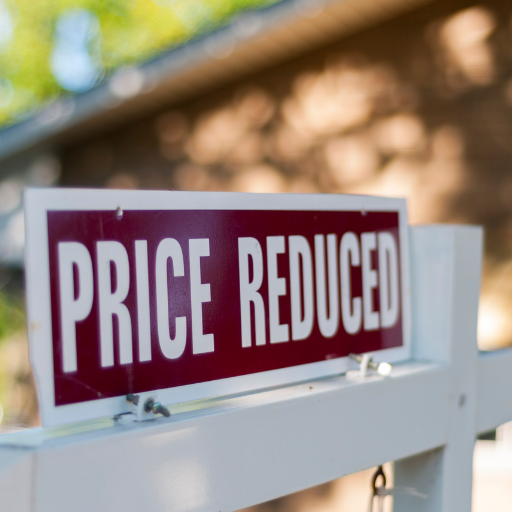
Most sellers and many agents focus primarily on active listings when they build a pricing strategy. Active listings tell you what other sellers are hoping to get. They do not tell you what buyers are actually paying.
Closed sales tell you what buyers paid. Expired and released listings tell you what buyers refused to pay. Both pieces of information matter and the combination of the two gives you a picture of the market that is far more accurate than active listings alone.
At 9818 E. 83rd Place, the expired and released data in the immediate area told a clear story. Homes asking above $135 per square foot in that specific micro-market were not selling. They were cycling. The closed data confirmed that buyers in that neighborhood were paying between $110 and $135 per square foot consistently. A list price built on that foundation gives a seller a real chance at a clean transaction. A list price built on hope gives a seller eighteen months of carrying costs and a lower final number than the market-anchored price would have produced in the first place.
Why Changing Agents Does Not Fix a Pricing Problem
Does relisting with a new agent help a home sell in Tulsa if it has been sitting on the market?
Relisting with a new agent can refresh a listing's presentation and marketing but it cannot fix a price that is above what the micro-market will support, because buyers and their agents are looking at the same data regardless of whose sign is in the yard.
Buyers in today's market are informed. Their agents are running the same comparable sales analysis I run. They know what homes in a specific neighborhood have sold for. They know what has expired. They know where the ceiling is.
When a home is priced above that ceiling, buyers do not make offers. They move on. A new agent with a new marketing plan and a new set of photos does not change the ceiling. Only the price does.
Three agents listed this property before me. I do not know what conversations happened or what data was presented. What I know is that the price never landed where the market required until Pam was ready to hear what the data had been saying for eighteen months. Once it did, the home sold.
If your Tulsa home has been sitting on the market or has gone through a previous listing cycle without selling, the first conversation we need to have is about the data in your specific micro-market. Not the marketing. Not the photos. The number.
Book that conversation at https://link.cncsdirect.com/widget/booking/2BPftOW1aYttaxdttERz.
Book a time with me at Legacy Coaching Solutions if you are ready to take your dreams to the next level and make them a reality.
Subscribe to our YouTube channel so you can be the first to see what we are writing about: https://www.youtube.com/@JenniferMount

FAQ: What Tulsa Sellers Ask When Their Home Is Not Selling
How long is too long for a Tulsa home to sit on the market without selling?
In the current Tulsa market with a median days on market of approximately 26 days, a home that has been listed for more than 45 to 60 days without a serious offer is signaling a pricing problem that needs to be addressed before the listing loses momentum entirely.
The longer a home sits the more skeptical buyers become. In a market where well-priced homes are moving in two to four weeks, a listing that has been active for 60, 90, or 113 days carries a stigma that compounds over time. Buyers and their agents wonder what is wrong with it. They make lower offers or they skip it entirely. The solution is almost always a price correction, and the sooner it happens the less damage the extended days on market do to the final sale price.
Should I withdraw my listing and relist at a lower price in Tulsa?
Withdrawing and relisting can reset the days on market counter in some cases but it does not change what buyers and their agents see when they pull the listing history, and in most cases a strategic price reduction on an active listing is more effective than a withdrawal and relist.
The listing history on 9818 E. 83rd Place is visible to every buyer's agent who pulls the property. One withdrawal, one expiration, four total listings across eighteen months. Buyers see that history and it affects how they approach the property and the offer they are willing to make. A clean pricing strategy from the beginning avoids that history entirely. If you are already in a cycle, the path forward is an honest conversation about where the market actually is, not another attempt to reset the clock.
What is a micro-market price ceiling and how does it affect my Tulsa home sale?
A micro-market price ceiling is the maximum price per square foot that buyers in a specific neighborhood or section of Tulsa have consistently demonstrated they will pay based on actual closed sales, and listing above that ceiling regardless of your home's features or condition will result in the home sitting unsold.
Every neighborhood in Tulsa has its own data story. The price per square foot that buyers will pay in one section of town is completely different from what they will pay three streets over. At 9818 E. 83rd Place the micro-market data showed a consistent ceiling of $110 to $135 per square foot across multiple closed sales. The peak ask on this property was $147.81 per square foot. That gap of $12 to $37 per square foot on a 3,782 square foot home represents the entire difference between a home that sells and one that cycles for eighteen months. Knowing your micro-market ceiling before you list is the single most important piece of information a Tulsa seller can have.
How do I know if my Tulsa home is priced correctly before I list?
Your home is priced correctly when your list price per square foot falls within the range that buyers have consistently paid for comparable homes in your specific micro-market based on closed sales in the last 60 to 90 days, not based on what you hope to net or what an active listing down the street is asking.
The distinction between closed sales and active listings is critical. Closed sales are what buyers actually paid. Active listings are what sellers are hoping to receive. A pricing strategy built on closed data gives you a number the market will respond to. A pricing strategy built on active listings or on what you need to net gives you a starting point for a long and painful listing cycle. I run this analysis for every seller I work with before we ever discuss a list price. Book a strategy conversation at https://link.cncsdirect.com/widget/booking/2BPftOW1aYttaxdttERz and we will look at your specific micro-market data together.
3-2-1 Takeaway
3 Things to Remember
A home that is not selling is almost always telling you something specific about its price relative to the micro-market it sits in. Changing agents, refreshing photos, or relisting does not fix a price that is above what buyers in that specific area will pay.
Expired and released listings are just as important as closed sales when building a pricing strategy. They show you where the ceiling is and they are visible to every buyer's agent who pulls your listing history.
The final sale price on a correctly priced home listed at the right number from the beginning is almost always higher than the final sale price on a home that has cycled through multiple listings and price reductions. The market rewards preparation and punishes the alternative.
2 Questions Worth Asking
Do you know what the closed sales in your specific micro-market say about the price per square foot buyers are actually paying, not what active listings are asking but what transactions have actually closed?
If your home has been on the market for more than 45 days without a serious offer, are you willing to have an honest conversation about the number before another listing cycle begins?
1 Thing to Do Next
If your Tulsa home has been sitting, or if you want to get the pricing right before you list the first time, book a micro-market analysis conversation with me before you make any decisions. We will look at your closed data, your expired data, and your price per square foot relative to what buyers in your specific area are actually paying right now. Schedule directly at https://link.cncsdirect.com/widget/booking/2BPftOW1aYttaxdttERz.
As my favorite mentor Brian Buffini says, Education without implementation is only entertainment. — Jennifer Mount, Legacy Realty Advisors
This post is intended for informational purposes only and does not constitute legal or financial advice. MLS data sourced from MLS Technology INC. All figures are approximate. Please consult with a licensed real estate professional before making any decisions related to buying or selling property in Tulsa.


